September 15th, 2026
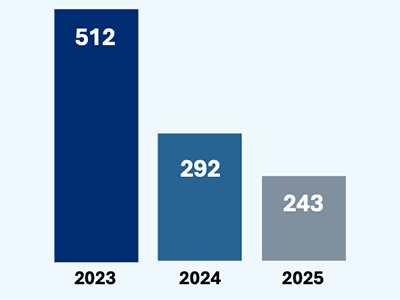
New report from the Office of the Medical Examiner shows in two years a 53% decrease in overall overdose deaths; 69% decrease in opioid-related deaths
County launches expanded overdose dashboard to create comprehensive look at causes of overdose deaths
Spanish Language Version (PDF)
View Medical Examiner Report (PDF)
Overdose deaths in Monroe County fell for the second consecutive year in 2025, according to the 2025 Overdose Deaths Report from the Monroe County Office of the Medical Examiner.
According to the report, 243 people died from an overdose last year, a 53% decrease from the 512 deaths in 2023. From 2023 to 2024, overdose deaths fell 43%, from 512 to 292, and new report shows that the trend has continued downward from 2024 to 2025, with a 17% decrease in overdose deaths, from 292 to 243. Out of those 243 deaths in 2025, instances specifically involving fentanyl, heroin, and related opioids fell 69% from the record high of 433 in 2023, and also continued downward from 2024 to 2025, with a 38% decrease in the number of deaths, from 216 to 135. The full report can be found at https://www.monroecounty.gov/opioid.
“Fewer overdose deaths means fewer families receiving devastating news. That is progress, but 243 deaths are still far too many,” said Monroe County Executive Adam Bello. “We have made naloxone and test strips easier to get, expanded street outreach and helped people connect with treatment. We will keep working with our community partners to reach people and make sure help is there when they need it.”
Monroe County continues to expand access to naloxone, fentanyl and xylazine test strips, treatment and other services. The County’s Addiction Services IMPACT team provides street-level outreach, harm reduction supplies, post-overdose response and connections to treatment and support 24 hours a day.
Monroe County places the money it receives from opioid settlements in a dedicated trust fund for prevention, treatment, recovery and other lifesaving work. The County also operates an Opioid Fatality Review Initiative, a multidisciplinary team that reviews overdose deaths to identify emerging trends and barriers to prevention.
The County’s additional efforts include:
- Operating a 24-hour hotline connecting residents with crisis services, harm reduction supplies, treatment resources, and family support.
- Maintaining a countywide network of 637 publicly-accessible Nalox Boxes. Indoor boxes also provide test strips that detect fentanyl and xylazine. Naloxone does not reverse the effects of xylazine because xylazine is not an opioid. However, naloxone should always be given when an opioid overdose is suspected because it can reverse the effects of fentanyl and other opioids that may be present. Nalox Box locations can be found at http://www.monroecounty.gov/health-narcan-map.
- Deploying the Addiction Services IMPACT team for countywide outreach, crisis support, post-overdose response, community education and one-on-one assistance.
- Working with community partners to monitor changes in the local drug supply, reach people at risk and reduce stigma around substance use disorder and treatment.
Though the 2025 overdose report points to a clear decreasing shift in overdose deaths, cocaine remained involved in four out of five deaths. The share involving cocaine without opioids rose from 22.6% in 2024 to 37.9% in 2025. Most deaths involved more than one substance, with alcohol, xylazine and other drugs frequently contributing.
“This report tells us overdose prevention can no longer focus on opioids alone,” said Commissioner of Public Health Dr. Marielena Vélez de Brown. “Cocaine was involved in four out of five deaths, and more than one-third involved cocaine without opioids. Cocaine can be deadly, especially when it is combined with alcohol or other drugs. If you use street drugs, test your supply, avoid using alone and keep naloxone nearby. And if you are ready for treatment, we are ready to help.”
Key findings from the 2025 Medical Examiner’s report include:
- Opioid deaths continued to fall: There were 135 deaths involving fentanyl, fentanyl analogs, heroin or morphine, a 38% decrease from 216 in 2024 and a 69% decrease from the record high of 433 in 2023. This was the lowest number of deaths involving these opioids since 2015.
- Cocaine without opioids made up a growing share of deaths: Cocaine was involved in 196 deaths, or 80.7% of all overdose fatalities. Approximately 43% involved both cocaine and opioids while 37.9% involved cocaine without opioids, up from 22.6% in 2024.
- Fentanyl and xylazine remained common: Fentanyl or fentanyl analogs were involved in 131 deaths. Xylazine was involved in 30.9% of overdose deaths, up from 26% in 2024, and was always found with fentanyl or a fentanyl analog. Carfentanil, a highly potent fentanyl analog, was involved in 15 deaths.
- Most deaths involved multiple substances: At least two of the three most prevalent substance categories, opioids, cocaine and alcohol, were involved in 56.4% of overdose deaths. All three were involved in 12.8%. Alcohol contributed to 67 deaths, or 27.6%.
- Racial disparities narrowed but remain: Black or African American residents accounted for 26.7% of overdose deaths, down from 31.2% in 2024, but remained disproportionately affected compared with their 17.1% share of the county population. Hispanic residents accounted for 9.9% of deaths, down from 14% in 2024. The highest overdose rates remained among Black and Hispanic residents ages 50 to 69.
- Men remained disproportionately affected: Males accounted for 71.2% of overdose deaths despite making up 48.2% of the county population.
- The median age continued to rise: Those who died ranged in age from younger than 20 to 76. The median age was 54, continuing a longer-term trend toward older overdose victims.
The 2025 report uses a broader definition of overdose than previous reports, which focused primarily on deaths involving opioids or cocaine. The expanded review identified five additional deaths involving neither substance. All five involved multiple substances.
Recognizing that opioids no longer tell the whole story, Monroe County is replacing its opioid-specific dashboard with the Overdose Surveillance Dashboard, a new overdose dashboard that provides a broader and timelier look at local overdoses.
The new dashboard brings together suspected overdose reports submitted through the National Emergency Medical Services Information System, preliminary information from the Medical Examiner’s Office, mortality statistics, and geographic and demographic data. Users can see where overdoses are occurring, examine rates by sex, age, and race or ethnicity, and compare Monroe County trends with neighboring counties and New York State.
"Tools like the County’s dashboard are essential to understanding where we are making progress and where more work is needed. Monroe County has used that data to invest in lifesaving services like those Delphi provides, helping us respond to community needs and reach people when they need us most. This progress is remarkable, but every life lost matters, and our work together continues,” said Jennifer Cathy, Delphi Rise President and CEO.
The Monroe County Overdose Surveillance Dashboard can be accessed at https://www.monroecounty.gov/health-surveillance-data-dashboards. The top left and top middle panels are updated on a weekly basis. The other panels are updated on a yearly basis, as new data becomes available.
Residents, service providers, and community organizations can use the dashboard to follow local trends and guide outreach, education, and prevention efforts. Some information is preliminary and may change as additional reports and toxicology results become available.
Addiction, or substance use disorder, is a medical condition. Treatment can help and recovery is possible. For treatment resources, naloxone, or test strips, visit monroecounty.gov/addiction or call (585) 753-5300 anytime.
For questions regarding the Overdose Surveillance Dashboard, email the Epidemiology and Disease Control Division of the Monroe County Department of Public Health at [email protected]